Quiz Planet
- 4.3
- Rating
- 5.00M
- Installs
- Free
- Price
 Analysis by App-foxy
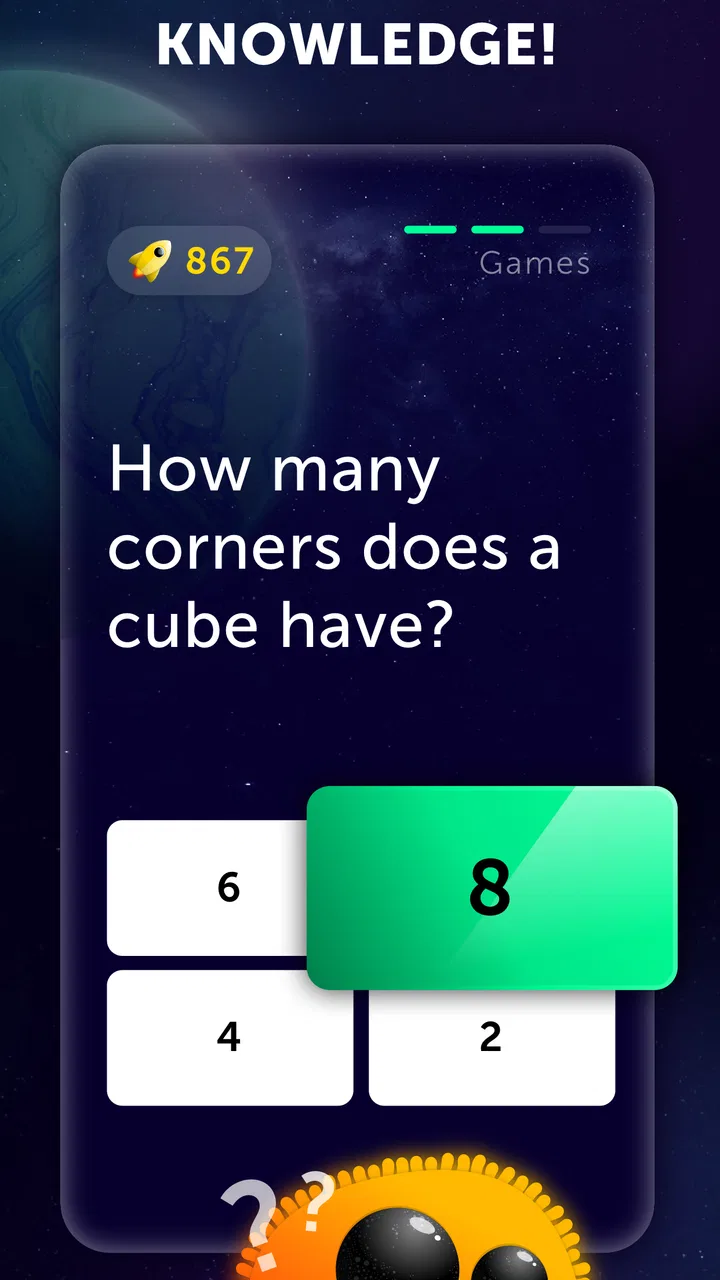
I enjoy trivia games most when they give me a reason to play one more round without turning every session into a serious study project. Quiz Planet fits that mood well. It is a free social trivia game from Lotum one GmbH, built around answering questions and competing with friends. The idea is easy to understand, but the real appeal comes from the small goals that appear during ordinary play: trying to improve a result, keeping a challenge moving, or proving that I know more about a particular subject than someone I play with.
That makes it a better fit for short, repeat visits than for a single long campaign. I can open it when I have a few spare minutes, answer questions, and leave without needing to remember a complicated story or control scheme. At the same time, the social format gives those brief sessions more meaning than a completely solitary quiz. If you like trivia but want a reason to return beyond simply checking your knowledge, this is one of the more approachable options to try.
How the first sessions establish a reason to return
The early experience works because the basic objective is immediately clear. I am not learning a large ruleset before I can play. I am answering quiz questions, making quick decisions, and seeing how my performance compares in a social setting. That low entry barrier matters, especially when I want something casual rather than a game that demands a long tutorial or a large time investment.
You May Also Like

 Blood Strike: 2.5 Anniversary
Blood Strike’s Loadouts Turn Every Drop Into a Tactical Gamble
A close look at Blood Strike’s custom loadouts: how fast access to signature weapons reshapes its battle royale rhythm, rewards preparation, and narrows the gap between fights.

 Pandora - Music & Podcasts
Pandora’s Music Is Easy to Start, but Harder to Recover
Pandora’s strength is its low-effort path from a seed to a station. Its weak spot is how much confidence it asks you to place in connection, setup, and quiet recovery.

 8 Ball Pool
 Is Built on Rivalries, Rematches, and Routine
A close look at the rivalries, rematches, shared routines, and unanswered safety questions that turn a quick pool match into a persistent mobile community.

 Samsung Music
’s Quiet Strength Is Playing What You Already Own
Its reach comes less from spectacle than from dependable access to a personal library. That simplicity is both the app’s strongest retention engine and its ceiling.

 AccuWeather: Weather Radar
AccuWeather Review: A Quick, Clear Forecast for Everyday Decisions
For everyday plans, the best forecast is the one you can understand quickly. AccuWeather makes rain timing, radar, and local conditions easy to act on, with a few trade-offs.

 Hill Climb Racing
Why Hill Climb Racing Still Turns Crashes Into One More Run
A tiny car, a bumpy hill and one more upgrade: Hill Climb Racing keeps resurfacing because its simple chaos makes every near-miss feel personal.
More From Our News Desk
View All News


The first useful goal is not necessarily to become an expert. It is to understand where I am reliable and where I am guessing. A round can expose a gap in general knowledge, but it can also reveal that I am much better at one subject than another. That creates a natural personal challenge: improve the weak areas, protect a good score, or simply beat the person on the other side of the match.
I also like that the social purpose is visible from the beginning. A trivia app can feel flat when every question is just a private test with no consequence. Here, the presence of friends changes the meaning of an answer. Even a small mistake can become a reason to ask for a rematch, while a strong performance gives me something concrete to defend next time.
The strongest early goal is improvement against a familiar person, not an abstract leaderboard. That distinction makes the game easier to recommend to people who do not normally play mobile games. Someone may ignore a traditional score-chasing quiz, yet still enjoy testing themselves against a sibling, partner, or friend.
What progress feels like during normal play
Quiz Planet does not need to overwhelm me with a large progression map to make progress noticeable. I can track improvement through practical signals: answering more confidently, recognizing recurring subject patterns, and making fewer rushed choices. Those are modest rewards, but they suit a trivia game because they connect directly to the activity rather than distracting from it.
The social comparison is another progress signal. Winning is the obvious one, but it is not the only useful measure. I may lose while performing better than in the previous challenge, or I may discover that a close match was more satisfying than an easy victory. This gives the game some flexibility for different personalities. Competitive players can focus on results, while casual players can treat each round as a quick mental exercise.
One practical habit improves the experience: I try to notice why I missed a question instead of immediately starting another round. Was the subject unfamiliar, or did I change a correct answer at the last second? Separating knowledge gaps from timing mistakes helps me decide whether I want another challenge or a break. It also prevents the game from becoming a mindless sequence of guesses.
The progression is most convincing when I play with a small, consistent group. With familiar opponents, improvement has context. I remember who usually performs well in certain areas, and an unexpected result feels meaningful. If I only play against people I do not know, the competitive loop can feel less personal, even though the quiz itself remains enjoyable.
Difficulty, pacing, and the difference between knowledge and luck
The difficulty of a trivia game naturally varies from question to question. That variation is part of the fun, but it can also make a session feel uneven. I may answer several questions confidently and then reach a subject where neither player has a solid advantage. In those moments, the result can depend on recognition, elimination, or a lucky guess rather than deep knowledge.
I see that as a trade-off rather than a flaw unique to this game. A quiz that only asked predictable questions would become dull quickly, while one filled with obscure material could make casual players feel excluded. The best way to approach Quiz Planet is to accept that not every round is a precise measurement of intelligence. It is a mixture of knowledge, memory, speed, and the ability to stay calm when the answer is not obvious.
The pacing supports short sessions because each decision has a clear purpose. I do not need to spend time arranging a team, exploring a map, or managing equipment before getting to the quiz. That makes the game useful during a commute, a short break, or a relaxed evening when I want interaction without a major commitment.
There is a hidden cost to that simplicity: people who want a carefully structured learning experience may find it too light. The game can test what I know, but it is not the same as a language course, a textbook, or a dedicated educational platform. When I miss an answer, the immediate satisfaction comes from the competition and the next question, not necessarily from receiving a detailed lesson.
My advice is to treat difficult questions as prompts for curiosity rather than proof that the game is unfair. If a category repeatedly causes trouble, I can use that pattern to choose what to read about later. That turns a short match into a starting point for learning, while keeping the game itself focused on fast social play.
Why the social loop can keep me playing
The main retention pressure comes from people rather than from a complicated reward structure. A pending challenge is harder to ignore than a generic notification from a solo quiz because another person is part of the experience. I may return to finish a contest, answer a friend, or try to recover after a disappointing result.
This is also where the game can become less comfortable. If I already have several active challenges, the sense of obligation can replace the sense of fun. A casual app should fit around my day, but social competition can create a small pressure to respond. I prefer to decide in advance whether I am playing for a quick break or entering a longer run of matches, rather than opening the game automatically every time I have a spare moment.
For families and friend groups, that pressure may be positive. A shared quiz can create an easy conversation starter, especially when players have different strengths. Someone who is not interested in action games may still enjoy the friendly rivalry. The Everyone content rating also makes it easier to consider for a broad household audience, although individual comfort with competition still matters more than the age label alone.
For solo players, the appeal depends on how much value they place on the social side. If I want an entirely private brain-training routine, a traditional single-player quiz may be a better match. Quiz Planet is at its best when I have people to challenge or when I enjoy the feeling of participating in a wider quiz community.
One useful way to avoid fatigue is to rotate the purpose of each session. Sometimes I play to win, sometimes to test a weaker subject, and sometimes just to exchange a few rounds with a friend. That small change in mindset keeps a loss from ruining the whole experience and stops every match from feeling like a high-stakes exam.
Everyday use: a realistic short-session example
Imagine having ten minutes before an appointment. I can start a challenge rather than commit to a full game with a long story or a fixed match length. I answer what I know, make a reasoned guess when necessary, and close the app when I need to leave. Later, I can return to see how the challenge developed instead of having to recreate the entire session.
Another good situation is a quiet evening with friends who are in different places. A shared trivia match gives everyone something simple to do without requiring a video call or a large block of free time. The conversation afterward can be as entertaining as the questions themselves: one person knows an unexpected fact, another makes a memorable mistake, and the group has an easy reason to play again.
I would not choose it for a formal quiz night where I need complete control over topics, timing, and scoring. It is designed for accessible social play, not for replacing a host-led event or a structured classroom activity. That distinction helps set the right expectations before downloading it.
How it compares with familiar trivia alternatives
Compared with a solitary daily quiz, Quiz Planet offers a stronger reason to involve other people. A daily format can be satisfying because it creates a simple routine, but it may feel repetitive once the personal score stops changing. Here, the opponent adds variety even when the basic action remains the same.
Compared with a large live quiz event, it is more convenient and less demanding. I do not need to be available at one exact moment or gather a room full of players. The trade-off is that it may not deliver the excitement of a shared, simultaneous event with a host and a dramatic final result.
Compared with educational quiz apps, it places entertainment and competition first. That makes it more inviting when I want to relax, but less suitable when my main goal is systematic revision. If I am preparing for an exam, I would use a specialist learning tool and treat this game as a break rather than my main study method.
The free price lowers the risk of trying it, and its broad audience makes it easy to recommend to a mixed group. Still, “free” does not automatically mean it will suit everyone. People who dislike social comparison, quick decisions, or repeated question-based play may lose interest even if they enjoy trivia in other formats.
Technical fit and practical expectations
The game supports Android devices running version 6.0 or later, so it remains accessible on a wide range of phones. Its current version is 330.1.1, which is useful to check when troubleshooting an installation or deciding whether an older device is likely to be supported. I would still keep the operating system updated where possible, since general device performance can affect how comfortable quick-answer games feel.
Its popularity gives the app a reassuring starting point. It has passed five million installs, holds a 4.3 average from roughly sixty-four thousand ratings, and has around two thousand three hundred written reviews. Those figures suggest a substantial audience, but they should not replace personal judgment: a popular social game can still be a poor fit for someone who prefers quiet, uninterrupted play.
The developer, Lotum one GmbH, has positioned the game around the social quiz experience rather than a complex genre blend. That focus is helpful because I know what I am downloading. I am not expecting a role-playing campaign, a puzzle adventure, or a deep simulation. I am opening it for trivia matches that are easy to start and easy to understand.
Who should try it, and who should skip it
I would recommend Quiz Planet to friends who enjoy friendly competition, need a game that works in short bursts, or want a low-pressure way to stay in contact with people. It is particularly suitable for groups with mixed gaming experience because the controls and objective are straightforward. A knowledgeable player can enjoy the challenge, while a casual player can still participate without learning elaborate mechanics.
I would be more cautious recommending it to someone who wants guaranteed educational depth, a fully offline routine, or a carefully balanced competitive system where every result reflects skill alone. Trivia always includes uneven subjects and fortunate guesses. If that uncertainty frustrates you, a focused practice app or a traditional puzzle book may provide a calmer experience.
I would also skip it when I am looking for a game with a strong sense of character, exploration, or long-term world building. Its appeal is concentrated in questions and social rivalry. That focus is a strength for the right audience, but it means there is less here for players who need a rich fictional setting to stay engaged.
My verdict on its goals and pacing
After spending time with it, I think the game sustains interest through a clean chain of small goals: begin a challenge, answer with care, compare results, and return because another person is involved. The progress signals are personal and social rather than elaborate, which keeps the experience approachable. The difficulty can swing with the subject matter, but that unpredictability is part of the quiz format and becomes easier to enjoy when I stop treating every result as a perfect skill test.
The main limitation is that the same social loop that encourages return visits can also feel like pressure. Players who prefer complete control over their schedule may find the ongoing challenge structure less relaxing than a solo quiz. I also would not mistake it for a serious learning tool. It can spark curiosity and reveal weak areas, but it is primarily a game.
For me, that is a fair and useful identity. Quiz Planet is best when I want a free, accessible trivia match with friends, a quick mental diversion, or a light competitive routine that can fit around everyday life. Its 2019 release and mature version history do not change the central judgment: this is a social quiz game whose strongest feature is giving ordinary trivia a personal opponent.
If that sounds like the kind of motivation you need, I think it is worth trying. Start with a small group, play a few short challenges, and judge it by whether the competition makes you curious to return. If you mainly want structured study, solo puzzles, or a deeper game world, choose a different category of app. For casual social trivia, though, Quiz Planet earns its place as an easy recommendation.
FAQs for Quiz Planet
01What is Quiz Planet and how does it work?
Quiz Planet is a social trivia game that allows users to challenge friends or compete against random opponents in a variety of trivia categories. Players answer questions across multiple rounds, and the one with the highest score wins. It's a fun way to test your knowledge and learn new facts.
02Is Quiz Planet free to play, and are there in-app purchases?
Yes, Quiz Planet is free to download and play. However, it does offer in-app purchases. These purchases can enhance the gaming experience by providing additional features, like removing ads or purchasing extra lives. It's optional, and you can still enjoy the game without spending any money.
03Can I play Quiz Planet offline?
No, Quiz Planet requires an internet connection to function. This is because the game is heavily based on multiplayer interactions, including real-time challenges against friends or other players. An active internet connection ensures smooth gameplay and access to the latest questions.
04Does Quiz Planet support multiple languages?
Yes, Quiz Planet supports multiple languages, making it accessible to a wider audience. The game automatically selects your device's default language, but you can change the language settings within the app if needed. This feature allows users worldwide to enjoy the game in their preferred language.
05How often are new questions added to Quiz Planet?
Quiz Planet regularly updates its question database to keep the gameplay fresh and engaging. New questions are added frequently across all categories, ensuring that players always have new challenges to tackle. This constant update cycle helps maintain the game’s appeal and educational value.
Pros
- Engaging multiplayer mode enhances fun.
- Wide variety of quiz categories available.
- User-friendly interface and navigation.
- Frequent updates with new questions.
- Customizable avatars add personalization.
Cons
- In-app ads can be distracting.
- Limited offline functionality.
- Occasional server connectivity issues.
- Some questions repeat frequently.
- Requires account for full features.

Quiz Planet
Gallery